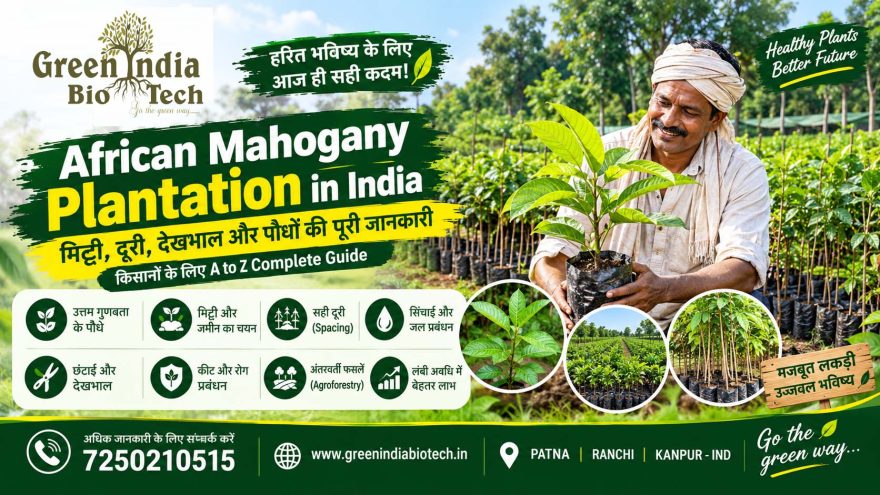

भारत में timber plantation और agroforestry को लेकर किसानों की रुचि लगातार बढ़ रही है। विशेष रूप से ऐसे पेड़ जिनसे long-term timber production की संभावना हो, plantation planning में महत्वपूर्ण हो सकते हैं।
Mahogany, विशेष रूप से Swietenia macrophylla, भारत में forestry और plantation research का विषय रहा है। ICFRE के अनुसार यह प्रजाति भारत में introduced हुई और Kerala, Tamil Nadu, West Bengal तथा Maharashtra में commercial plantations का उल्लेख मिलता है।
हाल के वर्षों में agroforestry को लेकर Bihar और Jharkhand जैसे क्षेत्रों में भी scientific farming systems पर जोर दिया जा रहा है। 2026 में ICAR-RCER Patna ने Jharkhand के farmers के लिए multitier agroforestry training में timber, fruit और annual crops को integrate करने की practical training दी और mahogany planting material भी demonstration के लिए दिया।

🌳 Mahogany क्या है?
Swietenia macrophylla King Meliaceae family का एक महत्वपूर्ण timber tree है।
ICFRE के अनुसार इसका common name Mahogany है और यह मूल रूप से South America से संबंधित species है। भारत में इसे विभिन्न क्षेत्रों में introduce और cultivate किया गया है।
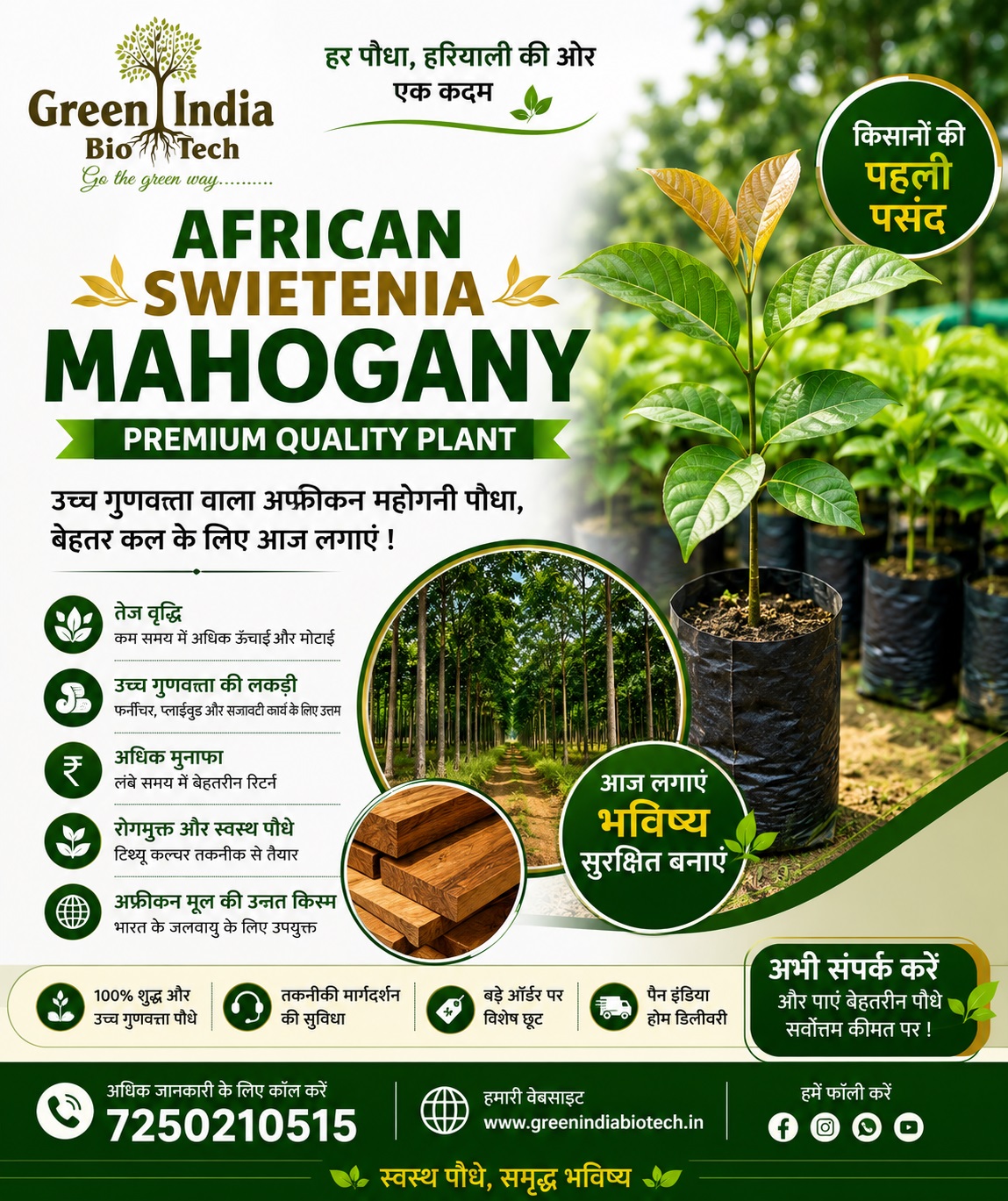
इसके wood की विशेषताओं के कारण इसका उपयोग furniture, cabinetry, plywood, construction, paneling और अन्य wood products में किया जाता है।
एक जरूरी बात
Market में “African Mahogany”, “Mahogany”, “Honduran Mahogany” जैसे common names अलग-अलग species के लिए इस्तेमाल हो सकते हैं।
इसलिए plant खरीदते समय केवल common name पर निर्भर न रहें।
Botanical name और planting material की पहचान जरूर पूछें।
🌱 African Mahogany Plantation क्यों करें?
Mahogany को लेकर किसानों की रुचि के कुछ प्रमुख कारण हैं:
1. Timber Tree
यह एक commercially important timber species है।
2. Long-Term Plantation
Mahogany plantation को short-duration seasonal crop की तरह नहीं बल्कि long-term tree plantation की तरह plan करना चाहिए।
3. Agroforestry Potential
ICFRE के अनुसार Swietenia macrophylla को agri-silviculture system में लगाया जा सकता है।
4. Wood Uses
Mahogany wood का उपयोग furniture और अन्य value-added wood products में होता है।
5. Farm Diversification
जहां suitable conditions हों, वहां timber trees को farm planning में शामिल करना income diversification strategy का हिस्सा हो सकता है।
लेकिन इसे guaranteed-return investment नहीं समझना चाहिए।
🏞️ Mahogany के लिए कैसी मिट्टी सही है?
यह plantation शुरू करने से पहले सबसे महत्वपूर्ण सवालों में से एक है।
ICFRE के Mahogany FAQ के अनुसार यह species विभिन्न प्रकार की soils में grow कर सकती है, लेकिन saline, sodic और waterlogged soils suitable नहीं मानी गई हैं।
इसलिए plantation से पहले:
- जमीन में waterlogging तो नहीं है?
- drainage कैसा है?
- soil depth कैसी है?
- soil fertility कैसी है?
- irrigation facility उपलब्ध है?
- soil test में क्या result आता है?
इन सवालों का assessment करें।
Soil Testing क्यों जरूरी है?
2026 में ICAR-MGIFRI, Motihari ने Bihar में farmer training के दौरान fertilizer decisions के लिए soil testing को आधार बनाने और excessive/imbalanced fertilizer application से बचने पर जोर दिया।
इसलिए plantation में भी बिना soil information के अंधाधुंध fertilizer डालने के बजाय soil test-based planning बेहतर approach है।
📏 Mahogany Plantation में पौधों की दूरी कितनी रखें?
यह प्रश्न किसानों द्वारा सबसे ज्यादा पूछा जाता है।
लेकिन spacing plantation objective और farming system के अनुसार बदल सकती है।
ICFRE के अनुसार Mahogany के agroforestry system में 4 × 4 metre spacing का recommendation दिया गया है, जिसमें शुरुआती 2–3 वर्षों में field crops लेने की संभावना बताई गई है।
दूसरी तरफ, ICFRE के genetic improvement trial में Swietenia macrophylla को 3 × 3 metre spacing पर भी establish किया गया था।
इससे एक महत्वपूर्ण बात समझ आती है:
Spacing को plantation model के हिसाब से तय करना चाहिए।
Block plantation, agroforestry, boundary plantation और timber-focused plantation में एक ही spacing लागू करना जरूरी नहीं है।
🌾 क्या Mahogany के साथ दूसरी फसल लगा सकते हैं?
हाँ, suitable conditions में Mahogany-based agri-silviculture system अपनाया जा सकता है।
ICFRE के अनुसार Mahogany के साथ निम्न intercrops के examples दिए गए हैं:
- Pumpkin
- Maize
- Sugarcane
- Banana
- Fodder grasses
- Pulses
- Chilli
- Drumstick
- Leafy vegetables
और field crops शुरुआती 2–3 वर्षों में plantation model के अनुसार लिए जा सकते हैं।
लेकिन किसान को यह समझना चाहिए कि हर crop हर जमीन और हर spacing पर समान performance नहीं देगी।
Crop selection में देखें:
Tree spacing + sunlight + irrigation + soil moisture + crop duration + machinery access
💧 Mahogany Plantation में Irrigation
नए लगाए गए plants के लिए शुरुआती establishment phase महत्वपूर्ण होता है।
Plantation planning में:
🌱 Initial Stage
Planting के बाद moisture management पर ध्यान दें।
☀️ Summer
Local weather और soil condition के अनुसार irrigation requirement बढ़ सकती है।
🌧️ Monsoon
बारिश के समय excessive water accumulation से बचना जरूरी है।
🚰 Drainage
Irrigation जितना important है, proper drainage भी उतना ही important है।
क्योंकि ICFRE के अनुसार waterlogged soil Mahogany के लिए suitable नहीं मानी जाती।
✂️ Mahogany में Pruning क्यों जरूरी है?
Mahogany plantation में stem form और tree management महत्वपूर्ण हैं।
ICFRE FAQ के अनुसार Mahogany में पहले तीन वर्षों में pruning की आवश्यकता बताई गई है।
Pruning का उद्देश्य generally:
- unwanted branches को manage करना
- stem form improve करना
- बेहतर tree architecture maintain करना
हो सकता है।
लेकिन pruning करते समय अत्यधिक branches एक साथ हटाना उचित नहीं है। Local forestry/agronomy guidance के अनुसार operation करना बेहतर है।
🐛 Mahogany में Pest Management
किसी भी tree plantation में regular monitoring जरूरी है।
ICFRE के research work में Mahogany के trials में leaf web worm और jewel beetle जैसे pests पर observations और management work report किया गया है।
इसलिए farmer को:
Regular Monitoring → Early Detection → Correct Identification → Appropriate Management का approach रखना चाहिए।
बिना pest की पहचान किए कोई chemical spray करना सही approach नहीं है।

🌿 अच्छी Quality का Mahogany Plant कैसे चुनें?
Plant खरीदते समय केवल height या बड़ा दिखाई देने वाला plant देखकर decision न लें।
Quality Plant Checklist
✅ Healthy stem
✅ Healthy leaves
✅ Proper root development
✅ Disease/pest-free appearance
✅ Proper nursery hardening
✅ Correct botanical identity
✅ Reliable nursery source
✅ Transportation में plant protection
✅ Plantation के लिए suitable age/size
सबसे महत्वपूर्ण:
Botanical name जरूर पूछें।
अगर seller “African Mahogany” कह रहा है तो पूछें:
“इस पौधे का botanical name क्या है?”
यदि आपका target specifically Swietenia macrophylla है, तो planting material की identity स्पष्ट रखें।
🔬 Mahogany पर India में Research
Mahogany सिर्फ commercial nursery market का विषय नहीं है।
ICFRE ने Swietenia macrophylla पर genetic improvement research भी की है। एक project में Tamil Nadu और Kerala में superior trees की identification, vegetative propagation और progeny trials पर काम किया गया। एक trial में 3 × 3 metre spacing का इस्तेमाल हुआ और pest observations भी दर्ज किए गए।
ICFRE के annual report में Swietenia macrophylla के selected genotype की in-vitro propagation पर research progress भी दर्ज है।
इससे यह स्पष्ट है कि Mahogany plantation के पीछे forestry research का भी आधार मौजूद है।
⏳ Mahogany Plantation कितने साल का Project है?
यहां किसानों को सबसे ज्यादा सावधानी रखनी चाहिए।
ICFRE FAQ में Mahogany के लिए economic rotation लगभग 25–40 years बताया गया है, जबकि कुछ private farms/plantation areas में इससे कम अवधि में harvesting के examples का उल्लेख भी है।
इसका मतलब यह नहीं है कि हर किसान को 15, 20 या 25 साल में निश्चित रूप से समान size या price मिलेगा।
Actual growth और harvest planning depend कर सकती है:
- genetics
- soil
- climate
- rainfall
- spacing
- irrigation
- nutrition
- pest management
- pruning
- site quality
- tree growth
- market conditions
पर। इसलिए “fixed year + fixed income” को guaranteed claim की तरह promote नहीं करना चाहिए।
💰 क्या Mahogany Plantation से Guaranteed Income मिलती है?
नहीं।
Mahogany एक long-term timber plantation है और इसकी economics कई factors पर depend करती है।
किसान को calculation में consider करना चाहिए:
Plantation Cost
- Plants
- Land preparation
- Pit preparation
- Labour
- Irrigation
- Fertilizer/manure
- Weed management
- Plant protection
- Pruning
- Replacement/mortality
Future Revenue Factors
- Tree size
- Timber quality
- Market demand
- Local timber prices
- Harvesting expenses
- Transportation
- Applicable government rules
- Buyer requirements
इसलिए कोई भी company अगर आपको “₹X.. lakh guaranteed return” जैसी बात बताती है, तो written evidence और local market verification के बिना decision न लें।
🌳 Mahogany Plantation in Bihar & Jharkhand
Bihar और Jharkhand में agroforestry को लेकर scientific initiatives चल रहे हैं।
2026 में ICAR-RCER Patna ने Ranchi-based Farming System Research Centre के माध्यम से Jharkhand के farmers के लिए multitier agroforestry training आयोजित की। कार्यक्रम में timber, fruit और annual crops के integration तथा local field conditions में demonstration पर जोर दिया गया। Mahogany planting material भी demonstration के लिए दिया गया।
इससे यह useful lesson मिलता है कि Bihar/Jharkhand जैसे क्षेत्रों में plantation को local agro-climatic conditions और scientific farm planning के आधार पर देखना चाहिए।
🌱 Mahogany Plantation की Step-by-Step Planning
Step 1 — Land Assessment
पहले जमीन की suitability देखें।
Step 2 — Soil Test
Soil condition और nutrient status समझें।
Step 3 — Plantation Objective
Decide करें:
Block Plantation / Agroforestry / Boundary Plantation
Step 4 — Plant Selection
Correct botanical identity वाला healthy plant चुनें।
Step 5 — Spacing Plan
Land और plantation system के अनुसार spacing तय करें।
Step 6 — Pit & Land Preparation
Local soil और plantation recommendation के अनुसार तैयारी करें।
Step 7 — Plantation
Suitable season और local conditions को ध्यान में रखकर planting करें।
Step 8 — Irrigation & Drainage
Water management को monitor करें।
Step 9 — Weed & Pest Management
Regular monitoring करें।
Step 10 — Pruning & Long-Term Management
Tree form और plantation health को maintain करें।
⚠️ Mahogany Plantation में किसानों की 8 Common Mistakes
1. केवल नाम देखकर plant खरीदना
“Mahogany” नाम काफी नहीं है।
2. Botanical name verify न करना
Species identification महत्वपूर्ण है।
3. बिना soil test के fertilizer डालना
Soil-test-based nutrient management बेहतर है।
4. Water logging को ignore करना
Mahogany के लिए waterlogged soil suitable नहीं मानी जाती।
5. गलत spacing
Plantation objective के अनुसार spacing तय करनी चाहिए।
6. Plantation के बाद देखभाल बंद कर देना
Tree plantation भी regular management मांगता है।
7. Guaranteed profit claims पर भरोसा करना
Timber prices future में fixed नहीं होते।
8. Harvesting rules verify न करना
Large-scale tree plantation/harvesting से पहले अपने state में applicable rules जरूर check करें।
🌿 GREEN INDIA BIO TECH — Plantation Knowledge
GREEN INDIA BIO TECH का उद्देश्य किसानों और plantation enthusiasts को plantation के बारे में practical और informative guidance उपलब्ध कराना है।
हमारे plantation range में:
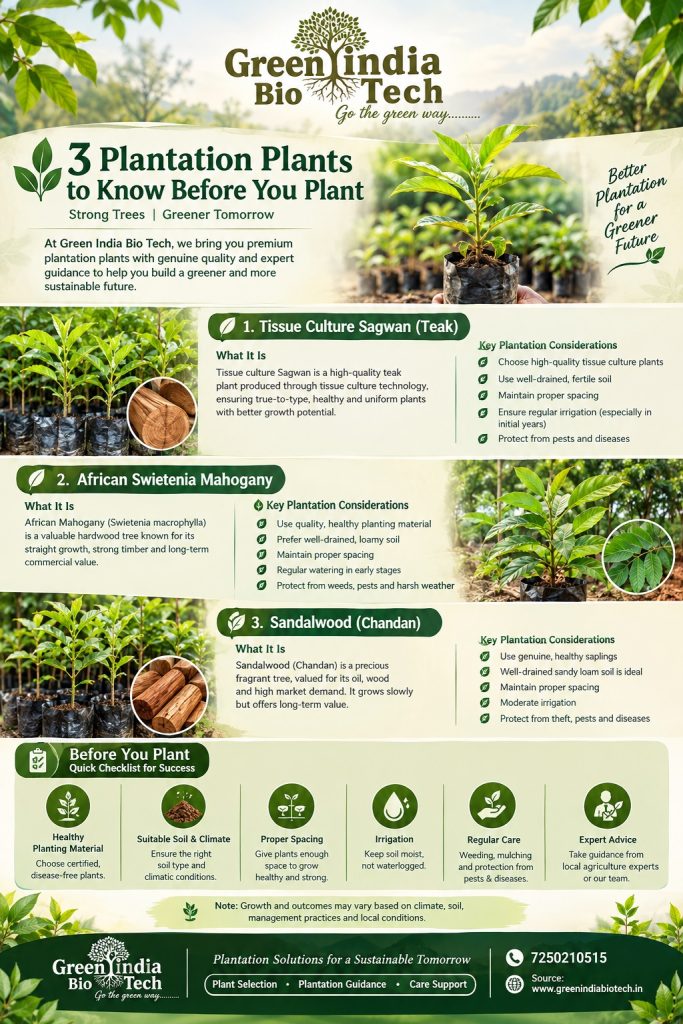
🌳 Tissue Culture Sagwan
🌿 Mahogany / Swietenia
🌱 Sandalwood
🥭 Mango
🌴 Horticulture Plants
जैसे plants शामिल हैं।
Plantation शुरू करने से पहले अपनी land condition, location, soil, irrigation और plantation objective के अनुसार सही planning करना जरूरी है।
📞 Plantation Enquiry
+91-7250210515
GREEN INDIA BIO TECH
🌐 www.greenindiabiotech.in
📍 Patna, Ranchi, Kanpur- INDIA“Go the green way……….”
❓ Frequently Asked Questions – African Mahogany Plant
1. Swietenia macrophylla क्या है?
Swietenia macrophylla King Mahogany की एक species है और ICFRE इसे Mahogany के common name से list करता है।
2. Mahogany के लिए कौन सी soil suitable है?
ICFRE के अनुसार यह कई प्रकार की soils में grow कर सकती है, लेकिन saline, sodic और waterlogged soils suitable नहीं हैं।
3. Mahogany plantation में कितनी spacing रखें?
Agroforestry system के लिए ICFRE 4 × 4 m spacing का example देता है; अन्य research trials में 3 × 3 m भी इस्तेमाल हुई है। इसलिए spacing plantation system के अनुसार तय करें।
4. क्या Mahogany के साथ दूसरी फसल लगाई जा सकती है?
हाँ। ICFRE Mahogany-based agri-silviculture में कई intercrops के examples देता है।
5. क्या Mahogany में pruning करनी पड़ती है?
ICFRE के FAQ के अनुसार पहले तीन वर्षों में pruning की जाती है।
6. क्या Mahogany plantation से guaranteed लाखों रुपये मिलते हैं?
नहीं। Plantation income future timber price, tree growth, quality, cost और market conditions पर निर्भर करती है।